Custom Permalinks Wordpress Plugin - Rating, Reviews, Demo & Download


Plugin Description
You want to take control of your WordPress site’s URLs? The Custom Permalinks plugin gives you the power to set unique, custom URLs for any post, page, tag, or category. This means you can design your site’s structure exactly how you envision it, rather than being limited by WordPress’s default settings. When you set a custom permalink, the original post URL will be automatically redirected to your new, customized URL.
Key Features
- A custom URL for any content: Set a unique permalink for any post, page, public custom post type (e.g. WooCommerce products), category, tag, or custom taxonomy term.
- Permalink structures per post type: Define a structure for each public post type from tags like
%year%,%category%, or your custom taxonomies. New content gets its permalink automatically, and you can still edit any permalink by hand. - Automatic redirects: The original URL redirects to the custom permalink, so existing links, bookmarks, and search rankings keep working.
- Multilingual: Works with WPML and Polylang, with a separate custom permalink for each translation.
- URLs in any language: Permalinks in non-Latin scripts, such as Arabic, Thai, or Cyrillic, work as you type them.
- All permalinks in one place: The Post Types Permalinks and Taxonomies Permalinks screens list every custom permalink, with search and bulk delete.
- A role for permalink managers: The Custom Permalinks Manager role lets non-administrators view and edit permalinks.
- Developer friendly: Filters and actions to add your own tags, generate permalinks in code, and control sanitizing and redirects.
Getting Started: Plugin Settings
Custom Permalinks adds a Custom Permalinks menu to your WordPress dashboard:
- Post Types Permalinks and Taxonomies Permalinks: Every custom permalink on your site, with search and bulk delete.
- Post Types Settings: A permalink structure for each public post type, built from the tags below. Leave a structure empty to keep WordPress’s default for that post type.
To set a permalink for an individual post, page, category, or tag, edit that item and look for the Custom Permalink field near the top (or in the sidebar) of the editor screen — enter the URL path you want and save.
Available Tags for Permalink Structures
When setting up your custom permalink structures, you can use a variety of tags that will dynamically populate the URL. Here’s a breakdown of what’s available:
- %year%: The year of the post in four digits, eg: 2025
- %monthnum%: Month the post was published, in two digits, eg: 01
- %day%: Day the post was published in two digits, eg: 02
- %hour%: Hour of the day, the post was published, eg: 15
- %minute%: Minute of the hour, the post was published, eg: 43
- %second%: Second of the minute, the post was published, eg: 33
- %post_id%: The unique ID of the post, eg: 123
- %category%: A clean version of the category name (its slug). Nested sub-categories will appear as nested directories in the URL.
- %author%: The post author’s username (login name). Note that this makes usernames visible in your URLs.
- %postname%: A clean version of the post or page title (its slug). For example, “This Is A Great Post!” becomes
this-is-a-great-postin the URL. - %parent_postname%: Similar to
%postname%, but uses the immediate parent page’s slug if a parent is selected. - %parents_postnames%: Similar to
%postname%, but includes all parent page slugs if parents are selected. - %title%: The title of the post, converted to a slug. For example, “This Is A Great Post!” becomes
this-is-a-great-post. Unlike%postname%which is set once,%title%automatically updates in the permalink if the post title changes (unless the post is published or the permalink is manually edited). - %ctax_TAXONOMY_NAME%: A clean version of a custom taxonomy’s name. Replace
TAXONOMY_NAMEwith the actual taxonomy name. - %ctax_TAXONOMY_NAME_name%: The custom taxonomy term’s name (instead of its slug). Replace
TAXONOMY_NAMEwith the actual taxonomy name. - %ctax_parent_TAXONOMY_NAME%: Similar to
%ctax_TAXONOMY_NAME%, but includes the immediate parent category/tag slug in the URL if a parent is selected. - %ctax_parent_TAXONOMY_NAME_name%: Similar to
%ctax_TAXONOMY_NAME_name%, but includes the immediate parent term’s name if a parent is selected. - %ctax_parents_TAXONOMY_NAME%: Similar to
%ctax_TAXONOMY_NAME%, but includes all parent category/tag slugs in the URL if parents are selected. - %ctax_parents_TAXONOMY_NAME_name%: Similar to
%ctax_TAXONOMY_NAME_name%, but includes all parent term names if parents are selected. - %custom_permalinks_TAG_NAME%: Developers have the flexibility to define their own custom tags (replace
_TAG_NAMEwith your desired name). To ensure these tags resolve to the correct permalinks, simply apply thecustom_permalinks_post_permalink_tagfilter.
Important Note: For new posts, Custom Permalinks will keep updating the permalink while the post is in draft mode, assuming a structure is defined in the plugin settings. Once the post is published or its permalink is manually updated, the plugin will stop automatic updates for that specific post.
Custom Permalinks: Fine-Tuning with Filters
Custom Permalinks offers a range of filters that empower developers to precisely control its behavior. You can explore all available filters, complete with example code snippets, in our GitHub repository.
For Assistance:
- Premium Users: If you need assistance implementing these filters, please don’t hesitate to reach out to us via our Premium contact support.
- Other Users: You can also directly reach out to the plugin author via LinkedIn.
Need Help or Found a Bug?
- Support: For one-on-one email support, consider purchasing Custom Permalinks Premium. While some basic support may be provided on the WordPress.org forums, email support is prioritized for premium users.
- Bug Reports: If you encounter a bug, please report it on GitHub. Make sure to provide complete information to reproduce the issue. GitHub is for bug reports, not general support questions.
If you experience any site-breaking issues after upgrading, please report them on the WordPress Forum or GitHub with detailed information. You can always revert to an older version by downloading it from https://wordpress.org/plugins/custom-permalinks/advanced/.
Screenshots
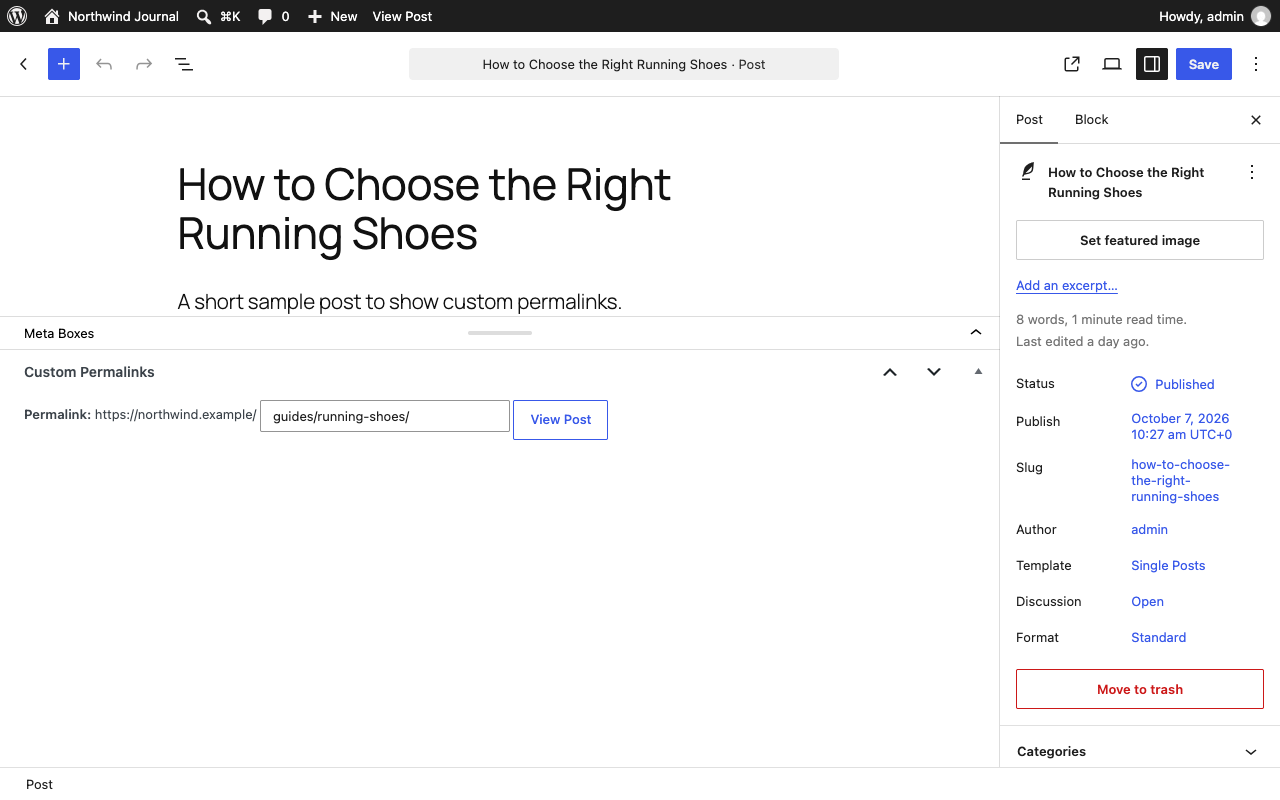
Set a custom permalink for any post or page from the Custom Permalinks box in the editor.
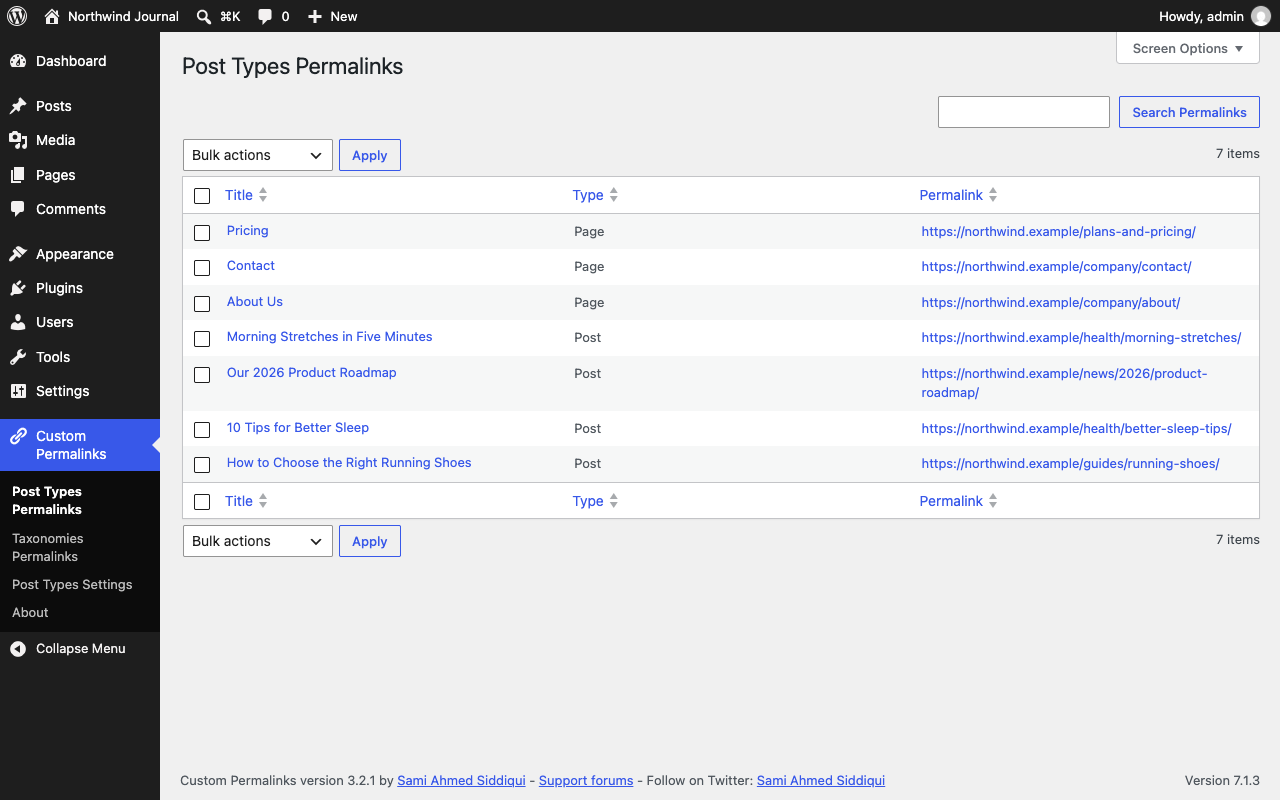
Post Types Permalinks lists every post, page, and custom post type with a custom permalink, with search and bulk delete.
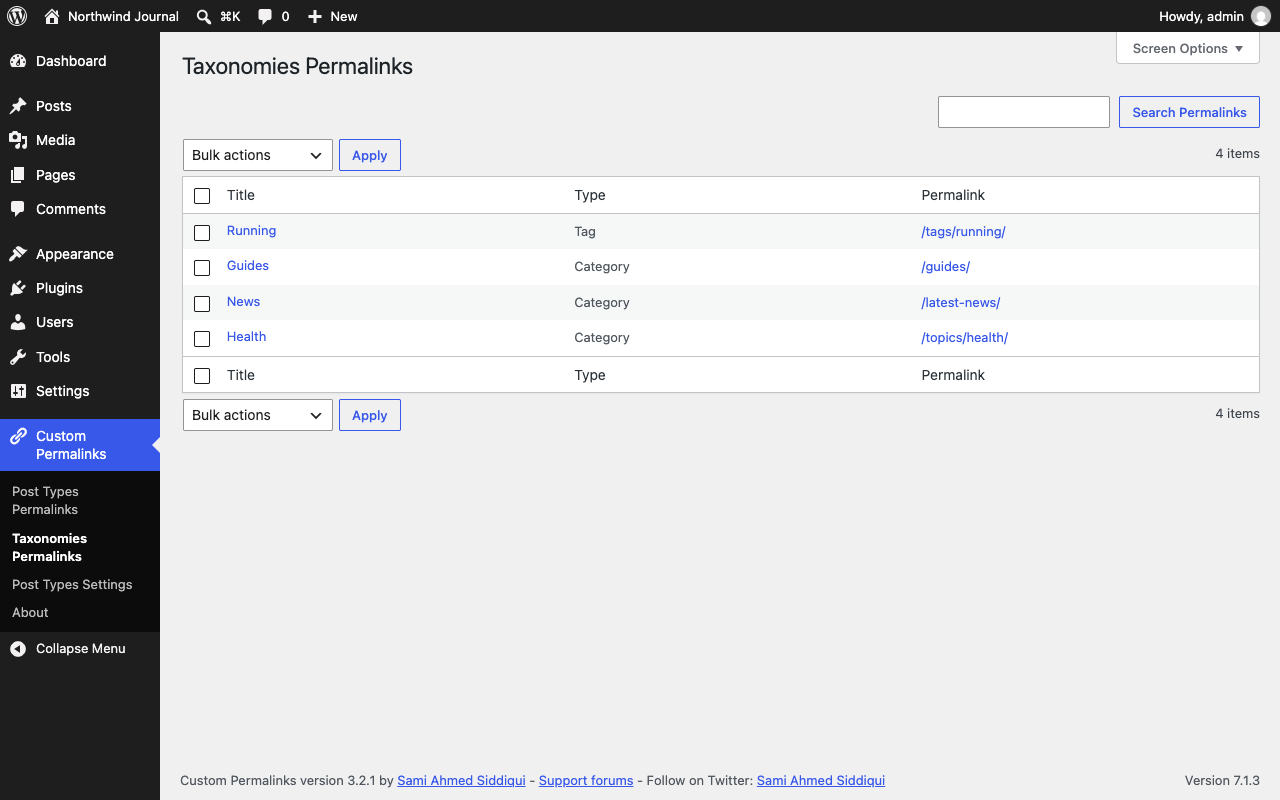
Taxonomies Permalinks lists every category, tag, and custom taxonomy term with a custom permalink.
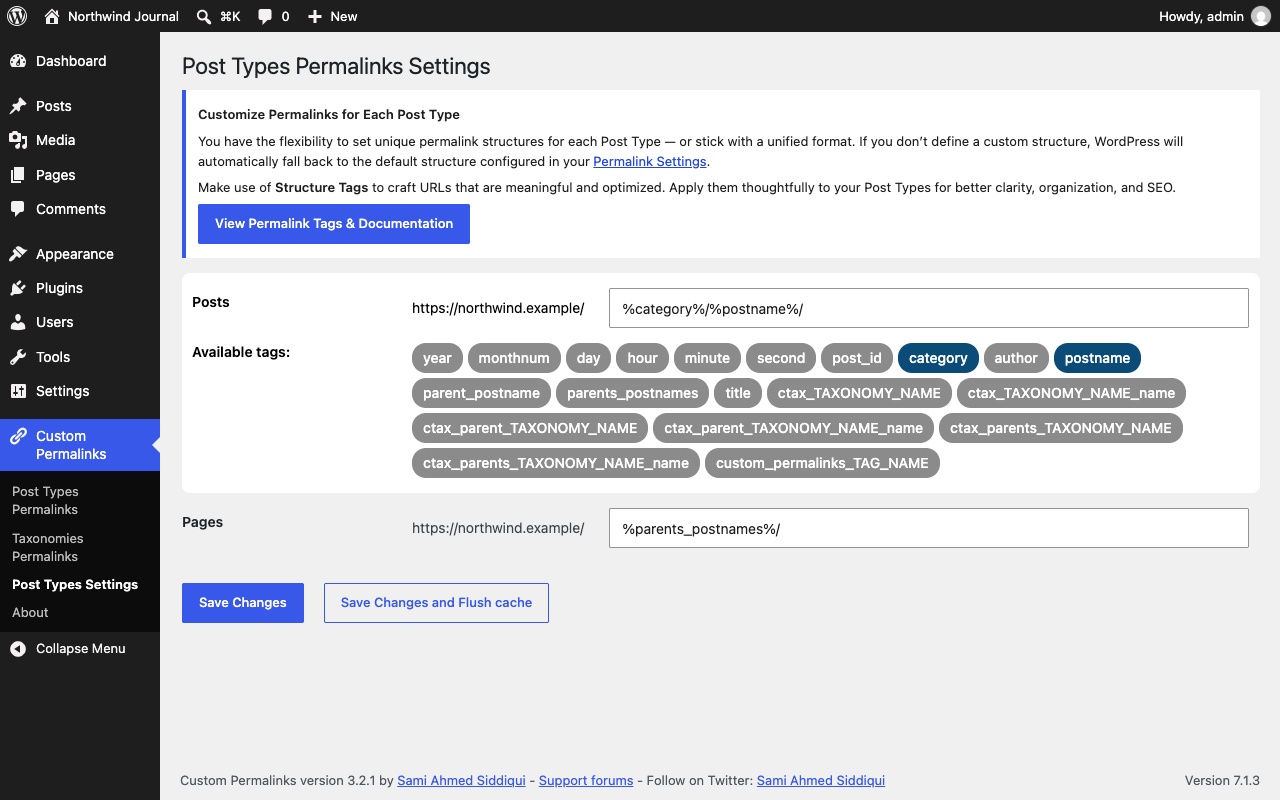
Post Types Settings: build a permalink structure for each post type from the available tags.
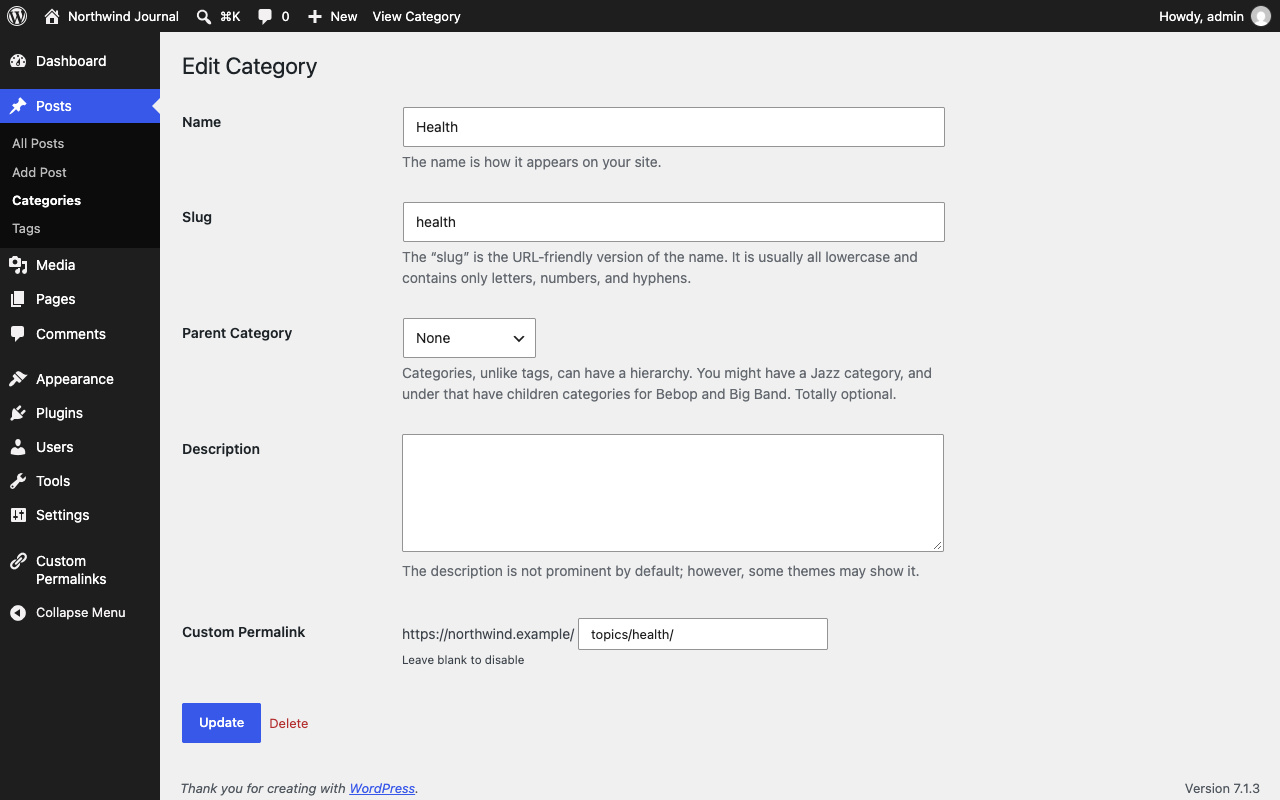
Set a custom permalink for a category, tag, or custom taxonomy term on its edit screen.