LolaCore For FSE Wordpress Plugin - Rating, Reviews, Demo & Download
Plugin Description
LolaCore for FSE adds Lola, an AI agent that edits your block theme by conversation, to WordPress. A normal afternoon with her looks like this:
You: lola, that work we were doing last week. i want to make some changes.

Lola: We were on the Riverside Bakery site. You customized the category template and we sketched a seasonal look for it. It is still a sketch. Want to build it out? Tell me what you have in mind.

You: refresh the category template for autumn. warmer palette, and a seasonal banner in the header.

Lola: That spans three layers of your block theme. Here is what I would change:
  1. Global styles: swap to the warmer palette. Typography and spacing stay as they are.
  2. Header part: add the seasonal banner above the navigation.
  3. Category template: keeps its structure and picks up the new palette on its own.
  Apply all three, or start with the palette?

You: all three.

Lola: Saved. Each change rolls back from Site Editor, then Revisions. Want me to keep this warmer palette as the client's autumn set, so next year it is one sentence?
She picked up last week’s thread without you re-explaining it, read the active theme, found the three places that change, edited them after you confirmed, and left you an undo for each. That is the whole product in one exchange: she remembers, and she does the work.
You build WordPress sites for a living. The design is what clients pay for. The clicking through the Site Editor is not.
A seasonal refresh on a client’s block theme means the category template on one screen, the header part on another, the color palette in a third panel, a navigation link in a fourth. Multiply that across every client site you maintain, every “quick change,” every theme you have not opened in three weeks and have to re-learn from scratch before you can touch it. That is the work that never lands on an invoice, and it eats the hours you would rather spend on the build.
LolaCore for FSE turns that work into a sentence. You describe the change. Lola reads the active block theme, shows you exactly what will change, and edits the template, part, pattern, navigation menu, or global styles once you confirm. Every write rolls back from the Site Editor’s own revision history.
Same WordPress. Same blocks. The theme you built, structure intact. Your team stopped clicking through panels and got the hours back.
This is for the people who live in Full Site Editing: developers, freelancers, and agencies maintaining real client sites. The people whose week is template tweaks, theme.json edits, and “can you just move the menu” tickets. Lola takes the repetitive execution off your team’s plate so the billable hours go to architecture and design, not menu-hunting.
One addon, two surfaces: wp-admin and your code editor
LolaCore for FSE is a mirror. Every ability Lola uses in the WordPress admin chat is registered over MCP, so your team manages site architecture from the tools they already work in: Claude Code, Cursor, or any MCP client.
The developer stays in the terminal. Read the category template, edit the header part, merge a new palette into theme.json, reorder the navigation, without opening wp-admin. For someone who thinks in a code editor, that is the difference between a context switch and a line they type without breaking flow.
You: read the category template and summarize the header part it uses

Lola: The category template renders the query loop at the "Wide" content width. Its header part is "header-primary": site logo, primary navigation, then a search block.

You: move the search block to the end of the nav, after the last link

Lola: Here is the new block order for header-primary. Confirm and I save it. Undo stays in Site Editor revisions, same as from wp-admin.
The account manager or designer on the same team works in the Lola chat inside WordPress admin. Same abilities, same client site, both surfaces. Everyone on your team works in the tool they are fastest in.
What Lola does with a block theme
See where the site stands
- Site Editor status: block-theme detection, active stylesheet, template and part counts, and whether custom global styles already exist. Lola checks this before proposing any change.
Templates and parts
- List block templates with slug, title, and whether each one is the theme default or a customization.
- Read one template, including a plain-language summary of its block tree, so you re-learn a site in seconds instead of scrolling the editor.
- Edit a template’s markup, with a preview of the change and confirmation before it saves.
- Reset a template back to the theme default when a customization went wrong.
- List template parts by area: header, footer, sidebar, uncategorized.
- Edit a part such as the header or footer, the same preview-and-confirm way.
Global styles (theme.json)
- Read user global styles: palette, typography, spacing, and custom styles.
- Merge a change into global styles. A palette edit changes the palette and keeps your typography and spacing as they are, because Lola merges into your theme.json.* List the style variations the active theme ships with.
- Apply a named variation by merging it into the global styles.
Patterns and page context
- List synced patterns (reusable blocks) with a block summary and where each one is used.
- Create a synced pattern from block markup.
- Update a synced pattern, with a heads-up that the change propagates everywhere it is used.
- Read a page or post block tree for context. This is read-only on purpose: page content edits stay with LolaCore core, so page content has a single owner and the boundary stays clear.
Navigation
- List block Navigation menus with their link labels and URLs.
- Add, remove, or reorder links in a Navigation menu, with confirmation and revision-based undo.
Cross-layer in one reviewed change
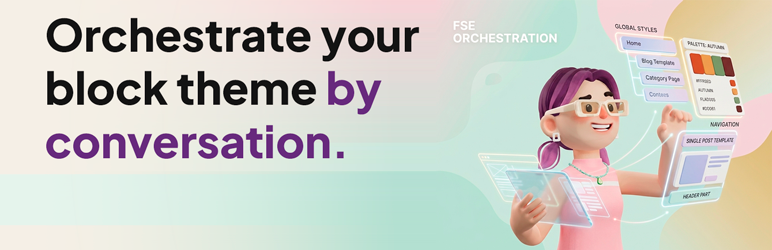
No single Site Editor screen touches more than one layer. “Refresh the category page for autumn” can mean the category template, the global color palette, and the header banner together. Lola handles that as one reviewed change, then points you to the revision you can roll back to.
Safe to say yes to
Every edit to a template, part, pattern, global styles, or navigation menu shows what changes and waits for your confirmation. It writes only what you confirm. Because templates, parts, and global styles keep WordPress core’s native revision history, the confirmation tells you exactly where to undo: Site Editor, then revisions.
Memory that survives the gap between visits
Her memory lives inside each WordPress install: the brand tokens, the templates your team customized, the decisions you made last time. Open a client site you have not touched in a month and Lola already carries its context, so you start from where you left off. The more client sites you run, the more that gap costs you, and the more this matters.
You: i have not opened this site in weeks. what is going on with the front page template?

Lola: It is a customization of the theme default. It stacks a hero pattern, a three-column feature row, then the latest-posts loop. Last time here you pulled the hero into its own synced pattern called "home-hero" so you could reuse it. It is still in use on two other pages.
An execution layer
Lola edits the five layers of a block theme by conversation. The Site Editor stays right where it is for the work you want to do by hand. Lola is the faster path for the change you already know you need, and she takes the repetitive admin off your team’s day.
Configure once
Your AI provider is configured once in WordPress (Settings -> Connectors, WordPress 7.0+). This addon runs on that same connection: one key, one place.
Requirements
- WordPress 7.0+
- PHP 8.1+
- LolaCore, active
- A block theme, for template, part, and global-style editing
For walkthroughs and example conversations, see lolacore.com/lolacore-for-fse.
Screenshots
No screenshots provided